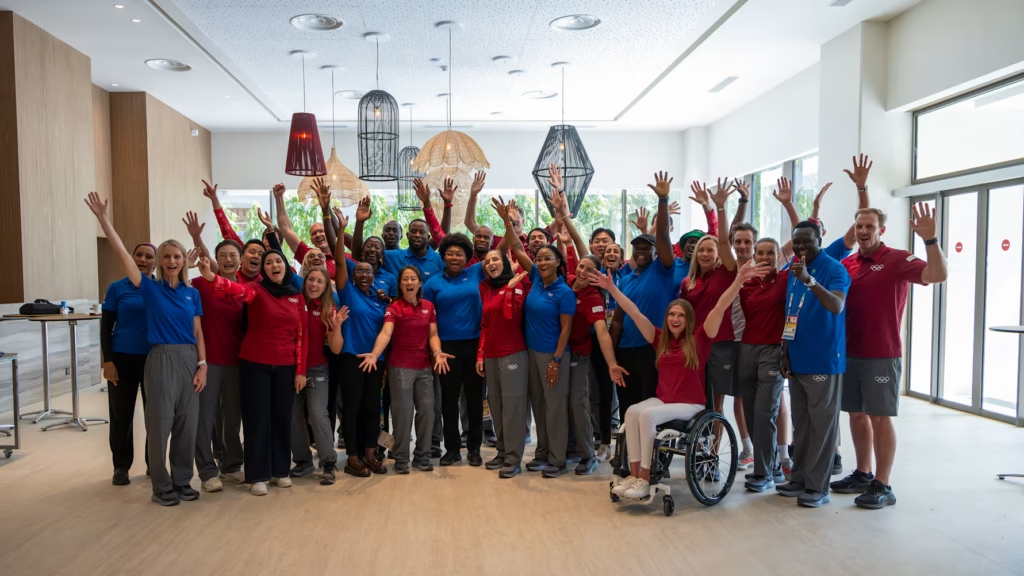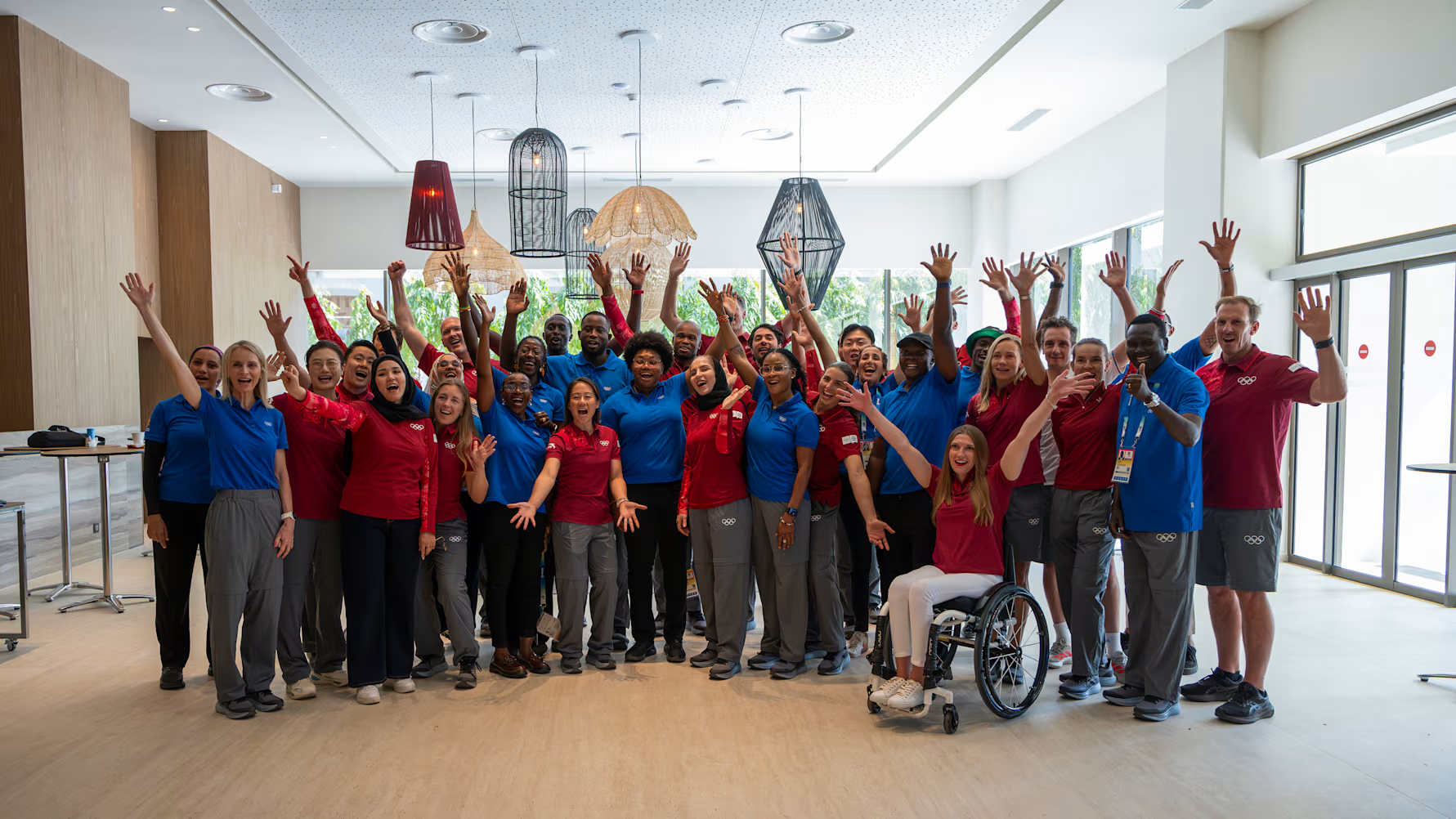
The IOC Athletes’ Commission (AC) held a joint meeting with the Athletes’ Commission of the Association of National Olympic Committees of Africa (ANOCA) in Dakar on 6 November.
Taking place during the Dakar 2026 Youth Olympic Games (YOG), the meeting brought the IOC AC together with athlete representatives from across Africa to share updates and strengthen cooperation.
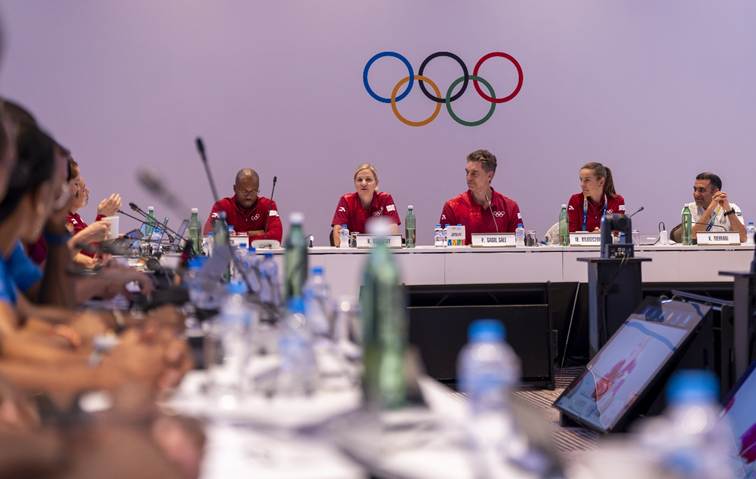
Led by IOC AC Chair Pau Gasol Sáez and ANOCA AC Chair Gaby Ahrens, the meeting was also attended by IOC President Kirsty Coventry and ANOCA President Mustapha Berraf and concluded with an interactive brand workshop.
“We are very excited to have this meeting here in Senegal, on African soil, and to have this opportunity to have our commissions come together to engage, interact, exchange and strengthen our connection,” said Pau.
“I’m really, really proud to have our two commissions here today,” added Gaby.
Athlete representation across Africa
After welcome remarks from the IOC President and ANOCA President Berraf, the members of the two Commissions introduced themselves before Gaby and the ANOCA AC provided an overview of their work and some recent updates.
The ANOCA AC, which represents athletes from 54 National Olympic Committees (NOCs), is currently made up of 14 elected athlete representatives – one man and one woman for each of its seven geographic zones – and two appointed members, while African IOC AC members also sit on the Commission.
The Commission is represented on the ANOCA Executive Board, while leading athlete engagement programmes and contributing to Coordination Commissions from the early planning stages of each regional Games.
It is currently working on a new Sustainability Champions programme, which aims to empower ACs to implement sustainable practices into events and operations. This includes environmental action, inclusion, athlete well-being and community engagement.
The ANOCA AC has also achieved a historic first at Dakar 2026, which is the first YOG where the athlete engagement programme has been co-organised with the continental AC.
“I think this shows the trust and the relationship that has been built in the last years between ANOCA and the IOC Athletes’ Commissions – this opportunity means the world to us,” said Gaby. “We’re learning a lot, we’re seeing what is being done and how we can implement it back at home.”
Shaping the future together
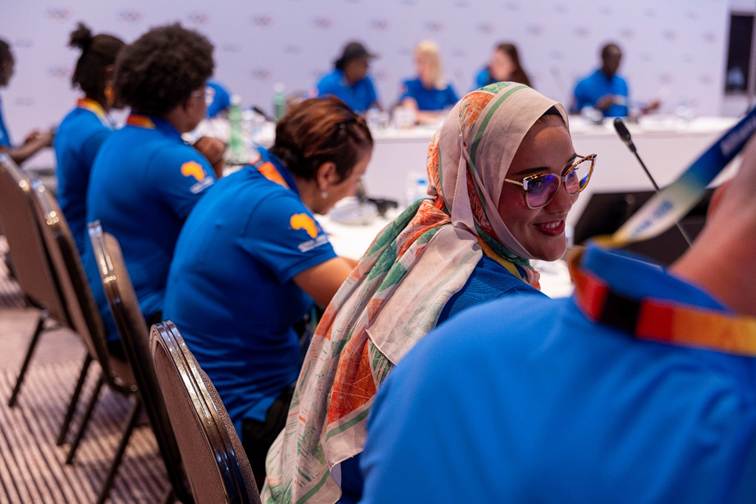
The IOC AC then gave an update on the Fit for the Future strategy, with the Commission currently leading the Athletes pillar.
Also discussed was the new Fit for the Future Olympian Grant, which gives all Olympians from Milano Cortina 2026 onwards USD 10,000 towards their future careers, and the newly launched Olympian Consultation, which aims to foster a stronger athlete community across Games, NOCs and sports.
Explaining the importance of the survey, IOC AC member Seyi Smith said: “I always look forward to coming to our meetings because it feels like I’m replenishing my soul – there’s something unique about this environment and the connections I have with people who I only see once or twice a year.
“That would be my feedback, but it’ll be different for other people – this survey is key to understanding what everyone needs.”
Building a new Olympic brand
The meeting ended with an interactive brand workshop led by the IOC as it aims to elevate the Olympic brand. This was an opportunity for the IOC AC and Africa’s athlete representatives to share their ideas and engage in group discussions on the challenges and opportunities of this process.
“I think the beautiful thing about the rings is that the meaning changes as you grow older,” said IOC AC member Husein Alireza. “When you’re young, it represents excellence. When you become an athlete, you understand what’s beneath the greatness and, eventually, the community that surrounds the Olympic Games.”